Plastic to Fantastic
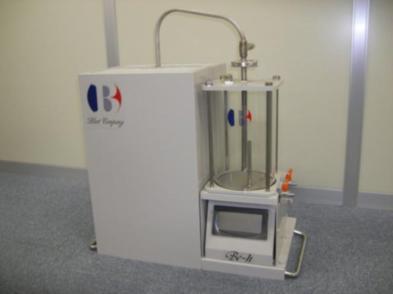
The Blest Corporation's plastic-to-oil machine is the foundation upon which we will build technology to facilitate the conversion of plastic to oil and build a greener future.
About
The main purpose of the Blest plastic-to-oil machine is to produce renewable oil from plastic and therefore reduce CO2 emissions. Introduced in 2010 by Akinori Ito, the Blest machine is a miniaturized version of the larger plastic-to-oil converters we see in the world today.
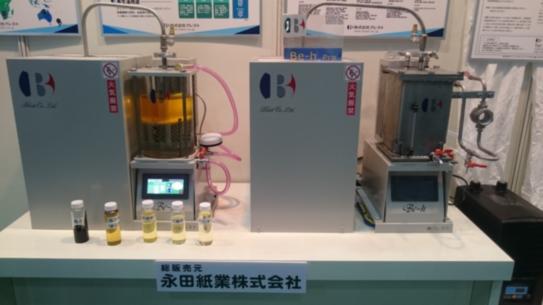
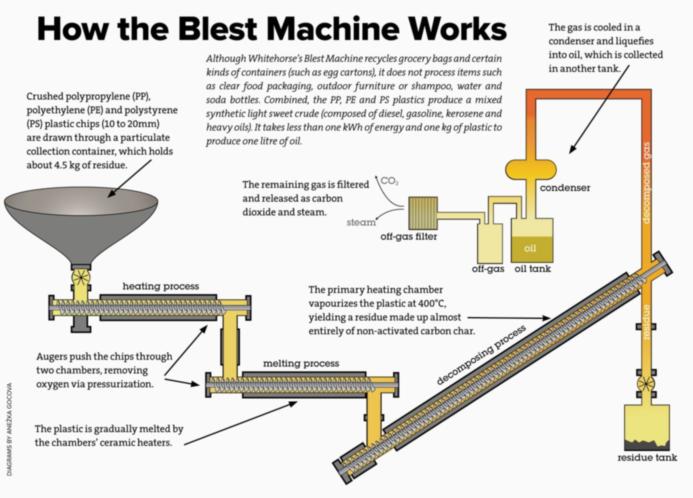
How it Works:
1) Plastic waste inserted into the machine is heated until it changes into a liquid
2) This liquid is then heated to become a gas.
3) The gas enters a tube and flows into a container of tap water, cooling it to form oil. At this point the oil can further be processed into gasoline, diesel, and/or kerosene if one chooses.
In the case of the Blest plastic machine, it can only convert PP, PE, and PS plastics into oil. As for other machines, such as the PK Clean, only PET and HDPE plastics can be converted.
If one uses the PK Machine, this process is different from Blest's. Instead, plastic is shredded and transported to a reactor, where its carbon chains are degraded via heating. After this, the vapor is condensed into oil.
Our Exploravision Model
The majority of our vision seeks to improve the capabilities of what types of plastic the machine can degrade rather than improving on the aesthetics of the machine itself.
In addition, we want to find a way to possibly degrade or turn the leftover impurities into something that can be beneficial. Depending on the possibilities available to us this product could be oil, or it could be something else.
As seen here, we would add multiple pathways for the plastic to travel through depending on what type it is. Instead of having multiple openings for plastic (reducing the amount that can be placed inside the machine), we would also have some sort of identification that the machine could use to sort each type of plastic and send down the correct path. All of these would converge into a tank for vapor, as these plastics mostly get converted to oil by having their vapor condense - it is only a matter of how they are broken down that is different.
No major modifications are planned to be made to the exterior.
Limitations
As previously stated, one of the major limitations in the current plastic-to-oil technology is the types of plastic that can be converted.
In order to surpass these limitations, more methods of conversion may have to be added, which introduces the possibility of increasing the size of the machine in order to have a product that can break down various types of plastic.
This, however, reduces portability. According to Akinori Ito, he wants to be able to bring this machine to places that can't afford these types of fancy products. But unless we find a way to shrink the size of the machine or produce machines that can only accept small amounts of plastic at a time, we may have to consider multiple machines for the same purpose.
This would the amount of money one would hypothetically spend in order to convert different types of plastic. Our model would not be as accessible or portable as currently existing ones due to all the limitations we want to attempt to fix.
Consequences
Benefits
• turns nondegradable objects into something beneficial
• reducing the amount of plastic in the environment
• reduces the amount of fracking/oil drilling, which can lead to disturbances in Earth's tectonic plates (e.g. earthquakes)
• could be built on in the future to degrade other types of waste into different substances (included but not limited to oil)
Drawbacks
• increases the amount of pollution from oil + promotes the use of fossil fuels
• current models do not allow for the degradation of some plastics, allowing for harmful substances to still be present in the environment. For example, PET plastic increases the amount of antimony present and HDPE/LDPE releases chemicals that can disturb natural hormones.
• even after converting plastic to oil, impurities are still leftover
• the machine itself is big and not very portable
• cost of buying the machine, particularly in lower-income areas
Credits
by Caitlin Chao, Sana Anand, Annie Chen, and Danielle Zhong
website made by Caitlin
Toshiba Exploravision Competition
Chemistry Pd. 7